What does Surah Ar-Rum say?
Allah the Almighty says in the Qur’an:
The Byzantines have been defeated in the nearest land. But they, after their defeat, will triumph within three to nine years. The whole matter rests with Allah before and after victory.
And on that day the believers will rejoice in the victory of Allah. He gives victory to whom He wills, and He is the Exalted in Might, the Merciful.
Surah Ar-Rum, verses 2-5
The phrase translated as “within three to nine years” is bid’ sinin. In Arabic, bid’ refers to a span of three to nine. This is also how the companions understood it, as Abu Bakr was told by the Prophet ﷺ that bid’ means what is between three and nine when he made his famous wager with the pagans of Mecca over this verse. [4]
The Byzantines on the brink
To understand this prophecy, we have to look at the state of the world around 615 CE. There were two world superpowers at the time, the Roman Byzantines and the Persian Sassanids. The two had begun a massive war with one another, and it was not a close war. The Sassanids were clearly coming out on top.
Look at what the Byzantines lost in this war. The Sassanids took Byzantine Armenia. They took Syria and Palestine. They took Egypt, Libya, and Anatolia. They even took the Byzantines’ “True Cross” artifact, one of the most sacred objects the empire owned. Thus, the Byzantine empire was headed for ruin. They lost everything to the Persian Sassanids, and hope was low. [1]
Keep in mind the context of the situation here. The Sassanians were occupying the land of another superpower and humiliating it in front of the whole world. Their morale and strength were at an all-time high, and they struck fear in anybody who dared stand in their way. The only thing that an ordinary observer could have seen is the incoming dissolution of the Byzantine empire. In fact, things were so hopeless that Heraclius, the Byzantine king himself, considered abandoning Constantinople and moving his government to Carthage, in Africa. [3]
During this time of absolute loss for the Byzantines, the Qur’an made a bold claim. It stated that the Byzantines would make a huge comeback against the Sassanians within 3 to 9 years. Imagine the consequences of this. Does it sound plausible to say that an empire being demolished on every front will triumph? To say that it will do so within 3 to 9 years? The risk is immense with this claim. If 9 years pass and this prophecy does not come true, the Prophet ﷺ will be proven to be a false prophet, and Islam collapses with him. Does it make sense for a liar to do something so risky?
Here is what Edward Gibbon had to say in “The History of the Decline and Fall of the Roman Empire” about this prophecy:
“At the time when this prediction is said to have been delivered, no prophecy could be more distant from its accomplishment, since the first twelve years of [the Byzantine King] Heraclius announced the approaching dissolution of the [Byzantine] empire.” [2]
A question may arise of why the words of Gibbon should matter here. Pay attention to the fact that Gibbon was not a Muslim. He had no interest in defending Islam. If the comeback had looked possible at the time, it would make no sense for him to write that no prophecy could be more distant from its accomplishment. Since he wrote it anyway, this means that the prophecy looked hopeless to everybody, Muslim or not. The only thing anybody watching in 615 CE could have expected is the Sassanians finishing the job.
The comeback
Of course, the prophecy did come true despite this. After about 7 years from the Byzantines’ defeat, they made a huge comeback and started to take back all of the lands they lost, within the very deadline the Qur’an had set. No observer would have expected such a thing to happen, yet the Prophet ﷺ and the Muslims knew otherwise. As shocking as it sounds, that is exactly what happened.
The timeline of this comeback is recorded plainly in the Encyclopaedia Britannica, in its entry on Khosrow II, the Sassanid king:
“At last, in 622, the emperor Heraclius (who had succeeded Phocas in 610) was able to take the field. In 624 he advanced into northern Media, where he destroyed the great fire-temple of Gandzak (Gazaca); in 626 he fought in Lazistan (Colchis), while Shahrbaraz advanced to Chalcedon, and tried in vain, united with the Avars, to conquer Constantinople. In 627 Heraclius defeated the Persian army at Nineveh and advanced towards Ctesiphon.” [5]
Notice the year 624. Only nine years after their defeat, the Romans were destroying Persia’s principal fire-temple within Persian soil.
This is how much land the Sassanids lost control of by the end of the Byzantine comeback.
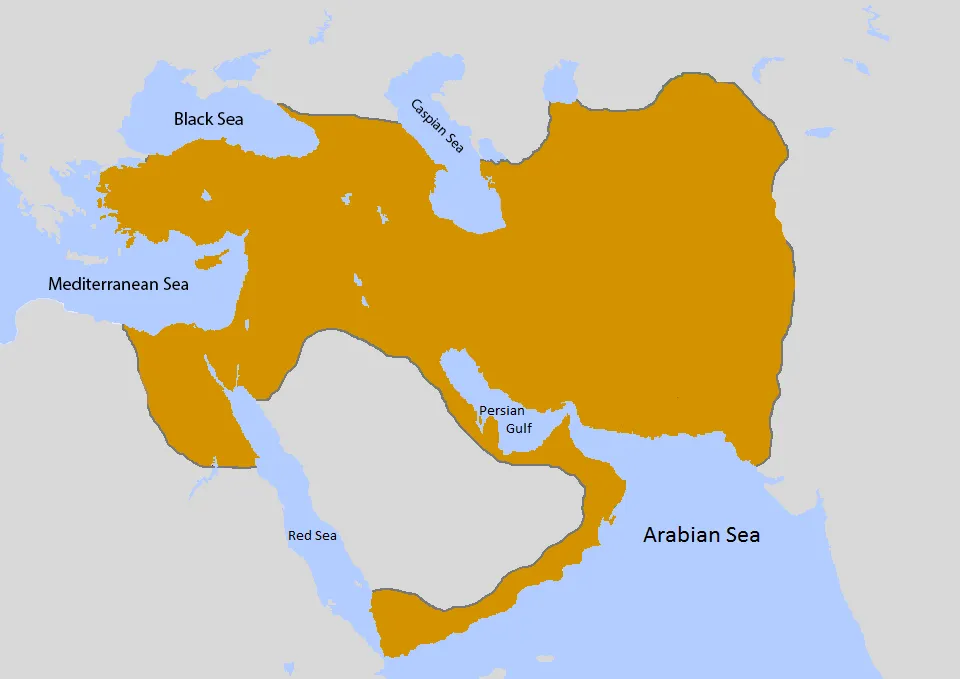
Before
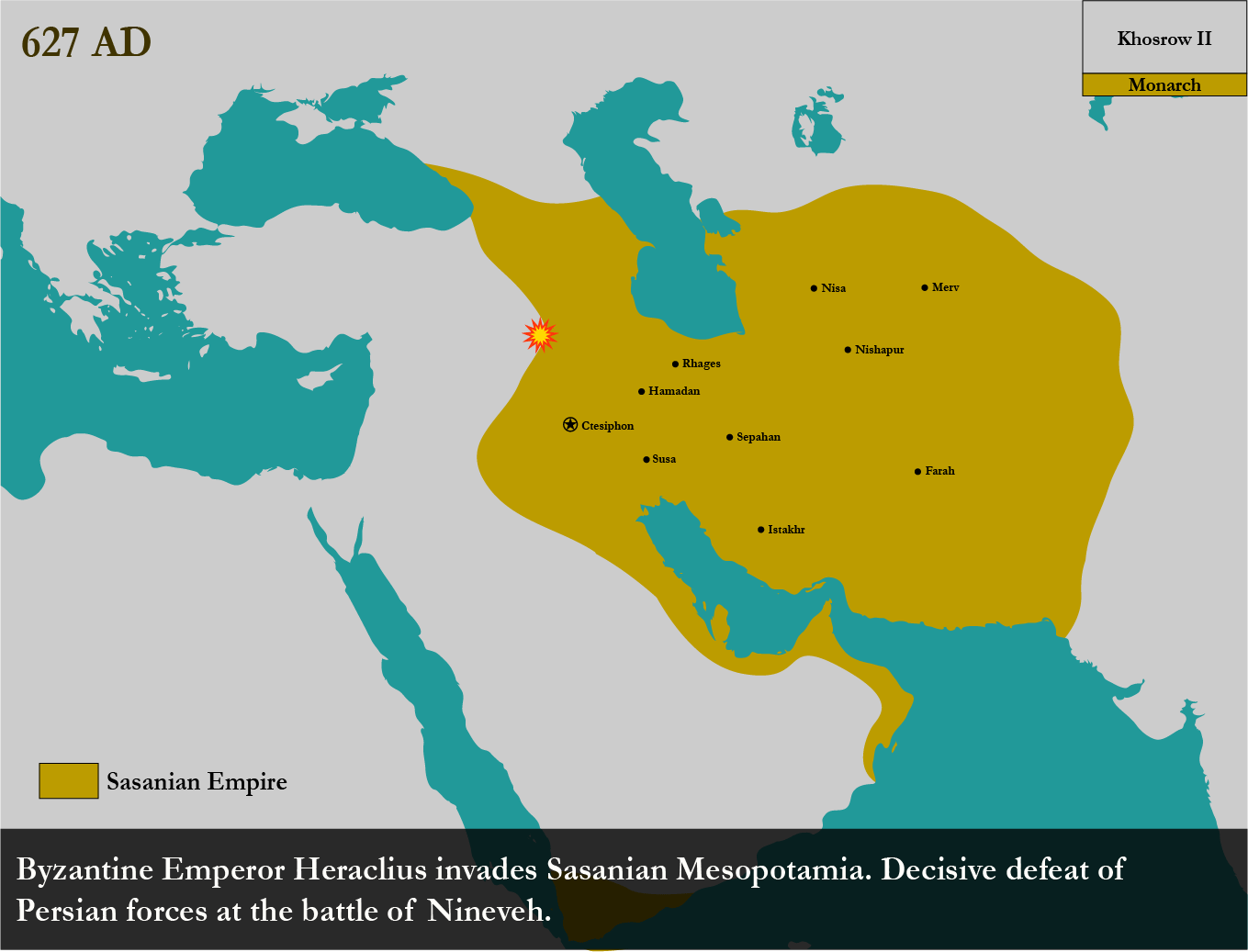
After
I’ve seen some people say that it was 13 years, not 3 to 9 years.
The Romans lost battles against the Persians in 615, and the Persians were defeated in 628. That's not within the given time frame.
The Persians defeat at 628 is the final culmination of the Persians losses, not when the scales were tipped. Looking at the timeline makes this very clear: in 615, the Romans lose against the Persians, by 624 the Romans had turned the war completely around and began attacks in Media, within Persian soil. This is clearly a comeback worthy of celebration. Not to mention that there are hadith about the Muslims celebrating this victory in 624, not 628. [6]
References
-
1. Daryaee, Touraj. SASANIAN PERSIA: the Rise and Fall of an Empire. BLOOMSBURY, 2021, pp. 33.
-
2. The History of the Decline and Fall of the Roman Empire, by Edward Gibbon, vol. 8, DeFau, 1907, p. 48.
-
3. Kaegi, Walter. Heraclius: Emperor of Byzantium. Cambridge University Press, 2003, p. 88.
-
5. “Chosroes”, Encyclopaedia Britannica, 11th edition (1911)
-
6. Jami` at-Tirmidhi 3192; some early scholars placed the celebration at Hudaybiyyah instead. The comeback stands on the historical timeline either way.